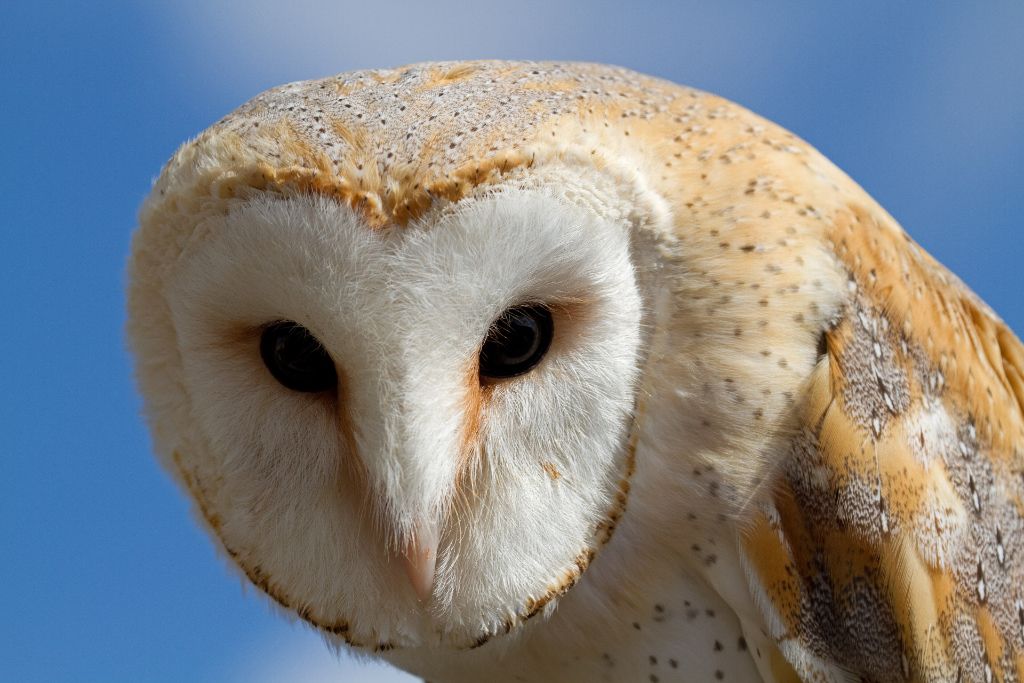
In this entry in the series on classic children’s books, the owls are not what they seem, but the English stay true to type.
For a children’s book, this book has an extremely chilly dedication line: “Possessive parents rarely live long enough to see the fruits of their selfishness.” Yikes. Alan Garner’s use of that quote in the preface seems particularly unfair given that – according to The Owl Service – parents are not free agents who can easily put their conditioning to one side, before they begin messing up the lives of their children. In this story, the chain of responsibility goes back for centuries, and the same myth remorselessly plays out its patterns over and over again.
Ever since it was published in 1967, The Owl Service has been praised as a children’s classic, yet has always divided its readers. Maybe less so than Red Shift, Garner’s next book, but all the same…some people do find The Owl Service very hard to read. The story is told in condensed bursts of dialogue with ‘blink and you miss it’ flashes of exposition, and puzzling events sometimes take a while to be explained. It is easy to get confused.
Garner demands your concentration, and regularly requires you to fill in the emotional detail around the sparse information he has provided on the page. You have to trust him, and most of the time he does repay that close attention. All of this leads however, to the real bone of contention. Did Garner really manage to resolve the story in a satisfying way, either intellectually or emotionally?
Because the answer requires some acquaintance with the plot, bear with me while I outline what The Owl Service is about. The book is set in modern times, in a remote village in Wales, where two upper-middle class English kids called Alison and Roger are on holiday with Alison’s nouveau riche stepfather, Clive.
Two Welsh servants work at the cottage where the children are staying – an eccentric handyman called Huw, and an emotionally volatile cook called Nancy, who has a teenage son, Gwyn. It falls to Gwyn, Roger and Alison to live out the doomed love triangle that echoes down the ages, within this community.
The love triangle in question is spelled out in a myth contained in a collection of pre-Christian Celtic mythology known as the Mabinogion. Specifically, Garner drew on a story from the fourth section of the Mabinogion concerning a woman called Blodeuwedd – a being who had been created out of flowers as a wife for the immortal Lord Lleu by his sympathetic uncles, Gwydion and Math. (Lleu couldn’t wed a human wife because of a curse laid on him by his mother for shaming her, but that’s another story.)
Once Blodeuwedd gained consciousness however, she rebelled against the patriarchal framework into which she had been placed. She fell in love with a local mortal called Gronw, and the pair successfully conspired to murder Lleu by the only means possible, with a spear crafted on a Sunday. Lleu ‘dies,’ turns into an eagle and flies away. As a punishment, Blodeuwedd is turned into an owl, fierce and solitary.
Being an immortal, Lleu returns and asks that – since he had been ‘killed’ by a spear – the atonement for his pain and humiliation requires that he be allowed to throw a spear back at Gronw. Since Gronw is a mere mortal, this is obviously a dangerous proposition. So Gronw asks that he be allowed to stand behind a large rock. Lleu hurls his spear right through the rock and kills Gronw.
It is this tale of sexual jealousy and revenge that keeps recurring among the valley inhabitants – try as they might to encode and contain its power in various objects, such as the dinner service that gives the book its title. In a previous incarnation, the love triangle may well have involved Huw, Nancy and the dashing Lord Bertram, sadly killed in a motorcycling accident that may (or may not) have been murder.
The narrative in The Owl Service though is focussed on the new triangle formed by Alison, her stepbrother Roger and Gwyn. Blodeuwedd is returning – and when she re-appears in Alison’s body, there is doubt about what shape will she take – benign or murderous?
There is equal uncertainty about which of the male protagonists will determine her fate, and the outcome of the story. “She wants to be flowers, but you make her owls,“ says old Huw in his best ominous yokel tones, “You must not complain then, if she goes hunting.”
The Life
Alan Garner is now almost 92 years of age. Reportedly, he still lives in the Alderly Edge region of Cheshire where his family has lived for some 300 years, and which provided the backdrop for his first two books. A sickly child, Garner once related in a 1995 interview how he had spent much of the first eight years of his life in bed, and was twice declared to be dead. For most of his life, he has also coped with bi-polar disorder.
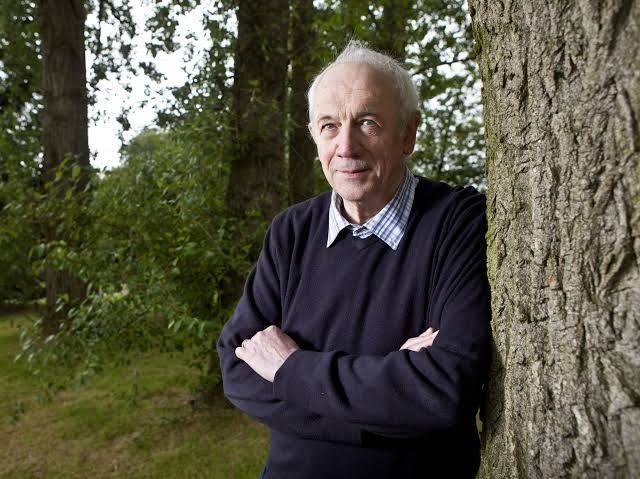
More to the point, Garner also had the dislocating experience of being the first child in generations of his family to receive a tertiary education. His family, he told an interviewer in 2010, were thrilled that “Alan was going to get an education” but “there was no concept of what that was. I soon learnt that it was not a good idea to come home excited over irregular verbs.”
Garner appreciated the tools of rationality that university gave to him, yet he also came to feel strongly that his education had divorced him from his roots. As a writer, much of his work has consisted of various forms of re-engagement with the folk tales and myths of his forebears in Cheshire, and then elsewhere in Britain.
Garner is well known for the intense research that has gone into his books. To do justice to the rhythms of the dialogue in The Owl Service he learned Welsh, and studied the body of research that now surrounds the Mabinogion collection of prose poems based on Welsh folklore. The poems were first translated into English by Lady Charlotte Guest in the mid 19th century. The poet Robert Graves later drew on Guest’s translation in his highly influential book The White Goddess– and there is some evidence that Garner in turn, was influenced by Graves’ handling of the Blodeuwedd myth.
Love Hurts
Certainly, there are triangles everywhere you look in The Owl Service. As mentioned, Alison, Roger and Gwyn are being cast as the latest version of the Lleu/Blodeuwedd/Gronw tale, which – skipping back a generation – was unhappily embodied by Nancy/Huw/Bertram. On top of all that, Alison has struck some reviewers as being an incarnation of what Robert Graves called the Triple Goddess, the alleged feminine fount of all poetry.
In the very first line of Garner’s book, there is a typically oblique hint that Alison is ‘sick’ in bed, perhaps because of having her first period. Having reached puberty, the core question posed by the narrative is what sort of woman she will now become – will Alison be a sweet flower child, or a hunter of men?
To Graves, the Triple Goddess had three lunar aspects that some readers have also found present in The Owl Service. Namely, the new moon (here, this is Alison) the full moon (Alison’s mother, the domineering Margaret) and the waning moon (the embittered Nancy). The real bone of contention is whether, having wheeled up this immense machinery of mythic allusions, has Garner been able to do it justice? And was a children’s book really the best place for him to try and pull off such an ambitious literary feat?
Wuthering Lows
From the outset, one has to admire aspects of the writing. Sixty years on, the dialogue has barely dated, and with deceptive ease it manages the feat of carrying most of the narrative. Some critics disagree, and claim that the staccato rhythms of the dialogue can become annoyingly tiresome to read. The brief patches of exposition are often very well written, as these two examples will, I hope, convey. Here is Roger at the relatively benign outset of the story:
The ridge above the house, crowned with a grove of fir trees, looked black against the summer light. He breathed the cool sweet air of the flowers. He felt the sun drag deep into his limbs. Something flew by him, a blink of dark on the leaves. It was heavy and fast, and struck hard. He felt the vibration through the rock, and he heard a scream…”
And here is Nancy, near the climax of the story, abandoning her child to the elemental forces now coming into play:
Nancy receded from him, leaving at the gate. “Mam !” She turned but did not stop. She walked backwards up the road, shouting, and the rain washed the air clean of her words and dissolved her haunted face, broke the dark line of her into webs that left no stain, and Gwyn watched for a while the unmarked place where she had been, then climbed over the gate.
Technical skills can take the reader only so far, though. Amid the abundance of literary criticism written about The Owl Service, it is striking how there is still some uncertainty as to which child is equivalent to which figure in the myth. Somehow, opinions differs as to whether Gwyn is to be taken as Lleu or Gronw. My own view is that Gwyn is clearly Gronw, Blodeuwedd’s human lover. Alison is attracted to Gwyn and that, to my mind, clinches the argument for him being Gronw.
This is precisely where the problems with The Owl Service really begin. Because this is a children’s book, it is not possible to render the re-enactment of the myth – which is a tale of sexual attraction, a crime of passion and a deadly revenge – with anything like the power that the story requires.
Because it cannot be a love triangle, the book awkwardly devolves into one of class conflict. On an intellectual level, I can reluctantly accept this. The myth is after all, a cycle that can take different forms every time it appears, and Garner could well argue that this (somewhat pallid) version is still a valid permutation, and one that will not necessarily determine how things might happen next time around.
The more serious problem is that the character of Gwyn is drawn so vibrantly that he completely overwhelms the two other non-entities in the current triangle. In fact, all three Welsh characters are intense and interesting while the three English characters barely seem alive, let alone passionate, let alone credible.
As Ursula Le Guin wrote in a perceptive 1974 essay, the myth of Blodeuwedd is so strong that it would take a dolt to spoil it in the re-telling. Yet in her view, Garner’s attempt ends up like Wuthering Heights with a Heathcliff, but with no Cathy to match and measure him:
Far from spoiling it, Garner worked into his recreation of it a restrained passion that is entirely his own. There is only one character in the book, Gwyn; the others are stereotypes, but Gwyn is quite enough.. Real passion is a very rare thing in modern novels. We skip from sentimentality to perversity, missing the centre, the real thing.
Gwyn’s love and desire, his despair, ambition, obstinacy, courage, the awful absoluteness of adolescent emotion; in these are the makings of tragedy, and of the tragic hero. The book would be indeed, fully comparable to Wuthering Heights if only Gwyn’s Alison were a Catherine Earnshaw. Alas, she isn’t. She isn’t much of anything, not enough to stand up to Gwyn, anyway.
Alison has reason to be attracted to Gwyn, and they share an enchanted day together up the mountain. But throughout, she remains under the thumb of her mother Margaret, who dominates both Alison and the foolish stepfather, Clive. Since Margaret is the real villain of the story – and presumably the target of that chilly dedication line I mentioned before – it is really unfortunate that Margaret never turns up in person in the story.
Gwyn is understandably annoyed at Alison’s feeble acquiescence to her mother’s demand that Alison never see him again:
“What can she do? Hang you in chains in the family dungeon? Lock you in a turret? Your name Rapunzel or something, is it? What can she do, girl? Shoot you?
“You don’t understand –
“I don’t understand. I understand what its been like since we went up the mountain, I’ll give you that free, girl…”
So with the heroine a doormat and the love triangle doused well before the finale, the struggle settles down by default, into a tale of class conflict. The thinly drawn and priggish figure of Roger – at one point, he refers to Gwyn as an ‘educated peasant’ – comes up trumps at the end, summons Alison’s better nature and averts catastrophe, all too readily.
‘Is that all it is?’ Roger says, voicing what many readers will also be feeling, ‘As easy as that?’ Gwyn, for all his passionate determination to escape from his upbringing, is shown as being unable to break the shackles of tradition and class resentment, not even to save Alison.
Reportedly, Garner’s biographer Neil Philip has claimed that for Gwyn to have emerged as the hero would have unduly sentimentalised the story, and denied what had gone before. I completely disagree. It would have been utterly in keeping with Gwyn’s renunciation of so much of what the valley represents, and also in keeping with how clearly he sees that it is Alison’s deference to her mother (and to the related attitudes of her social class) that is burying her alive.
Even the most timid of romantics, I think, couldn’t help but feel let down by the way that Garner chose to resolve this myth.
Forever English
Perhaps the real audience for the ending to The Owl Service was Garner himself. For his entire life, England’s class divisions have been a central concern for him. In interviews, he has talked about the loss he felt from becoming educated, and from rising above his station. In a paper delivered to a conference in the Soviet Union in 1989, he expressed himself in this telling fashion:
To become a whole, mature human being, I had to integrate my divided self. I am making the story too simple. But, unless you are English and aware of the subtle cruelties of the English class system, you will not understand the complexity of my distress. It was an anger, a sense of outrage at once personal, social, philosophical, and linguistic.”
In The Owl Service, Garner chose to use Gwyn as the vehicle for much of that personal anger and distress at the injustices of the class system. We see Gwyn’s fierce drive to escape his upbringing, his awareness of how hard and unfair this struggle will be, and all that he might lose – temporarily at least – in the attempt. Even so, Garner could not quite bring himself to carry that rage onwards, into the book’s conclusion. In my opinion, this failure of nerve fatally damaged his novel.
It also goes to show that the emotional lives of the English will always be a mystery to the rest of us.
For this essay, Gordon Campbell has drawn upon on the essays and reviews by Donna White, David Rees, Frank Eyre and others, contained in volumes 20 and 130 of the Children’s Literature Review.
Previous essays in this series: The Moomins by Tove Jansson; Goodnight Moon by Margaret Wise Brown; Badgers Parting Gifts by Susan Varley; The Incredible Journey by Sheila Burnford; Harriet The Spy by Louise Fitzhugh; The Indian in The Cupboard by Lynne Reid Banks; The Dark Is Rising by Susan Cooper; The True Confessions of Charlotte Doyle, by Avi; Abel’s Island by William Steig; Mrs Frisby And The Rats of NIMH by Robert C.O’Brien; Homecoming by Cynthia Voigt; The Hunger Games by Suzanne Collins; Tom’s Midnight Garden by Philippa Pearce. Go Dog. Go! by P.D. Eastman.