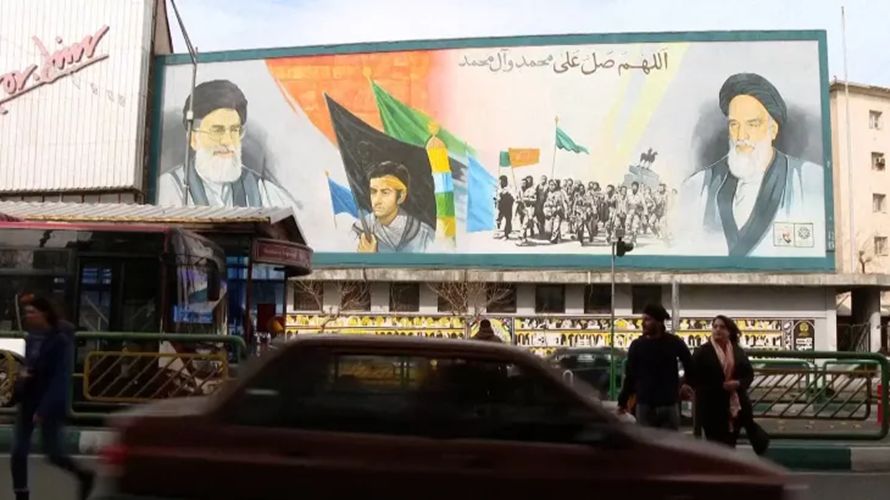
The mullahs in Iran must be feeling very pleased with themselves. They have just carried out versions of the Tiannenmen Square Massacre over and over again, in towns and cities right across the country. Yet the rest of the world has simply shrugged, and moved on. The tens of thousands who have marched against the Gaza genocide have been nowhere to be seen.
Thanks to the West’s indifference, the Islamic Republic is now more firmly entrenched than ever. In addition, the mullahs now know that the US, Israel and the Arab states actually prefer to keep the Islamic Republic in place, rather than doing anything significant that might put Iran on the messy, unpredictable path to liberation.
On the streets of Tehran and in provincial cities and small towns all over the country, the regime’s security forces have been given the green light to use live ammunition to kill and maim tens of thousands of unarmed protesters. Wounded patients have been removed from hospitals by the regime’s roving goon squads. Reportedly, many of the medical staff who treated the victims have been rounded up, tortured and disappeared.
As a result, the only genuine existential threat to the regime – an internal uprising – has been crushed, probably forever. True, the UN long ago imposed sanctions on the regime. These are highly selective, and their social impact is toxic. Meaning: the international sanctions used to keep the regime in check have always left the leading ayatollahs and the Revolutionary Guard elite completely untouched. All that the sanctions have achieved is to wreck the domestic economy and impoverish tens of millions of ordinary Iranians, who have just paid a terrible price for protesting about the intolerable conditions that the UN (and others) continue to impose on them.
The West should stop kidding itself about who is being hurt by the sanctions. The hypocrisy involved is staggering. If you – or anyone else – want to send $50 to friends or family inside Iran to help them cope with the soaring cost of living, you can’t. The sanctions forbid the banks from forwarding the funds. Yet at the same time, Mojtaba Khamenei, the second eldest son of Iran’s Supreme Leader has been able to move money offshore and inshore with impunity. In the process, Mojtaba has amassed a multi-billion property empire all around the word. As an extensive Bloomberg News investigation revealed in late January:
His [Mojtaba’s] financial power has embraced everything from Persian Gulf shipping to Swiss bank accounts and British luxury property worth in excess of £100 million ($US138 million…. Together, the web of firms has helped Khamenei to channel funds — by some estimates in the billions of dollars — into Western markets, despite US sanctions imposed on him in 2019.
Those investments are extensive, and pricey:
[They include] prime real estate — one house cost £33.7 million when it was bought in 2014 — in several of London’s most exclusive neighbourhoods, a villa in an area dubbed the “Beverly Hills of Dubai” and upscale European hotels from Frankfurt to Mallorca. Funds for the transactions have been routed through accounts at banks in the UK, Switzerland, Liechtenstein and the United Arab Emirates, according to documents seen by Bloomberg and people familiar with the matter. The funds originate primarily from Iranian oil sales, the people said.
You have to ask: what is the point of crippling the ability of ordinary Iranians to feed their families, when the same sanctions regime leaks like a sieve as far as the regime’s leadership is concerned? To evade sanctions, Iran’s smuggling trade is extensive and very lucrative – and it is controlled by the leadership of the Revolutionary Guards. Initially, the supposed aim of the sanctions was to de-legitimise the regime in the eyes of the 92 million ordinary people of Iran.
Well, mission accomplished. So let’s stop doing it. Because the end result of this deliberate process of reducing ordinary people to grinding poverty has been to strengthen the Islamic Republic, and embolden it. The mullahs now know that West doesn’t pose a serious military threat to its survival – because if the West can turn a blind eye to January’s slaughter, what on earth would ever trigger a meaningful intervention? Answer: nothing. At worst, all the mullahs will have to endure is a few more of Trump’s performative bombing raids, and then carry on as usual. In the past few hours, the mullahs have begun arresting several of Iran’s moderate reformist politicians.
“Weakening” the regime
If the shared aim of the US, Israel and the Arab states was to make the lives of ordinary Iranians so miserable they would then rise up against the regime…well, the deadly folly of that approach has just been demonstrated. What this recent bloody episode has really exposed is that the West regards those 92 million Iranians as being totally expendable.
The US/Israeli/Saudi priority appears to be to “weaken” the regime, such that it will curtail its activities in Yemen and Lebanon. Dream on. To Washington, Venezuela seems to be the template. Leave the regime intact, make it pay protection money and threaten dire consequences if it doesn’t play ball. Gunboat diplomacy, meet gangster diplomacy.
Venezuela appears to have obeyed. It would be foolhardy to expect Iran to do likewise. Compliance with this kind of extortion racket is simply not part of the DNA of the Islamic Republic. Resistance through suffering is embedded in the worldview of the Supreme Leader and his Shi’ite clerical underlings. Not that the mullahs plan on suffering at all, personally. Iran knows that the current “negotiations” with Washington over a new nuclear deal are only a farce, a face-saving gesture to enable Donald Trump to divert attention away from America’s impotence.
The fact that Trump is negotiating at all over Iran’s nuclear programme is bizarre, given his history on this issue. On gaining the US presidency in 2016, the first thing that Trump did was to rip up the Obama deal with Iran that had limited its nuclear programme. Ten years later, Trump is now engaged in re-inventing the same deal that he formerly disparaged as “the worst deal ever negotiated.” Iran is happy to play along with the charade. Only the West’s mainstream media are taking it seriously.
Footnote One: So what should New Zealand do? In an ideal world in which we had the best interests of the Iranian people in mind, we would withdraw from the UN sanctions regime, and recommence our lucrative beef trade with Iran. But we won’t do either, for fear of the United States response. For the Luxon government, having an independent foreign policy is no longer an option.
At the very least, we could invite Mai Sato, the UN Rapporteur on human rights in Iran to New Zealand, in order to learn first-hand about the impact the sanctions are having on ordinary people inside Iran, even while they are having no impact at all on the country’s leaders.
Footnote Two: What has been the extent of the carnage? Mai Sato has been reported as saying that at least “5,000 plus”or (based on medical reports) “about 20,000 or more” may have died in the crackdown. In late January, the London-based Iran International news service cited a death toll of 36,500. Due to the Internet blackout imposed by the regime, a verifiable death toll has been impossible to assess.
Footnote Three: We cannot feign ignorance about the failure of the UN sanctions policy. In the wake of the First Gulf War in the 1990s, the UN sanctions put in place to punish Iraq reportedly killed as many as 1.5 million Iraqi civilians (mainly children) and harmed many millions more, via starvation and malnutrition. Saddam Hussein and his ruling circle were not affected. We are repeating this cruel folly again now, in Iran.
Footnote Three: As mentioned, the US and Israel seem intent on treating the symptoms of Iran’s regional activities, while deliberately not addressing the cause, at its source. In the coming months, if the US does take further military action against Iran, this will probably be against Iran’s oil facilities, as a way of pressuring China.
Meaning: China’s big strategic weakness is that it is not energy self-sufficient. Beijing has just lost access to Venezuela’s oil. Besides what it buys on official oil markets, China is somewhat reliant on black market oil imports from Iran and Russia. Since the oil exports of both those countries are sanctioned, China gets their oil at a bargain price. If Trump wants to play hard ball with China, the US could well target Iran’s oil facilities. Doing so would, of course, cut off Iran’s main remaining source of foreign exchange, and impose further catastrophic hardship on the people of Iran. Yet clearly, the West doesn’t give a toss about them.
Footnote Four: Finally on this point, one can only speculate about the eventual repercussions of Venezuela’s oil flowing onto global markets. Logically, it should increase supply, and reduce the headline price for oil. Paradoxically, this would enable China to reduce its reliance on the black market oil from Iran and Russia.
Where is the tipping point on price? As Javier Blas recently did on Bloomberg News: if prices are up in the $US80-100 range per barrel, the black market oil from Iran and Russia looks more attractive to China, since Beijing can get it at bargain rates – as its reward for busting the global sanctions. But if the official price is sitting in the $US55-70 range – which it is right now – why go to all the bother? Official oil is then cheap enough.
Meaning: it might be difficult for the US to use the oil weapon to put significant pressure on China, even if the Americans do decide to bomb Iran’s oil facilities. If stripped of its back-up supplies from Iran – variously estimated to provide between 13-20% of China’s energy needs – China would then become an even bigger player on the world’s official energy markets. This would drive up petrol prices for everyone, including for US motorists.
Let’s hope the US doesn’t go down this road…if only for the sake of Iran’s people, who have suffered more than enough.