This week, Superbowl football and the Winter Olympics have both served to illustrate the massive role that professional sport now plays in modern life. Reportedly, of the 20 most watched TV events in American history, 19 of them have been Superbowl broadcasts. Across the entire duration of last year’s game, the Superbowl drew an average of 127-7 million American viewers, peaking at 137 million in the second quarter. As has been widely noted, that peak figure was only 20 million below the number of Americans who voted in the 2024 presidential elections.
Forgive the cliché, but professional sport has become what religion used to be. Clichés aside, sport is one of the few remaining realms of public life to offer a widely shared set of meanings, in which rival allegiances are recognised, and generally tolerated for the greater good:
It’s the one subject you can bring up at any bar in the country to spur engaged conversation, instead of blank stares or seething anger. We argue about sports without being argumentative; we hate each other’s teams without being hateful; we disagree about players and coaches while being able to point to scoreboards and statistics and common facts.
Obviously, New Zealand is no exception. For decades, this country has experienced both saturation levels of sporting involvement, and a steadily declining role for religion. On census figures, over half the population now profess to have no religion at all. In the same 2023 Census, only 32.7 % of the population identified as Christians – down from 80% in 1960. Moreover, the 2023 Church Life Survey found that only 12% of the New Zealand population attend church on a weekly basis. By contrast 74% of New Zealand adults in 2023 were taking part in sporting activity once a week, and among those aged 5-17 the participation rate was over 90%.
Within this national quasi-religion, sporting celebrities and rising sports stars play the role of celebrants. Remarkably though, sport also happens to be a context where unionisation pays concrete financial dividends, even in America. Given the turnover rate of star players, it has been hard for sports unions to win (for rank-and-file players) a fair share of the massive profits they help to generate. Even so:
Thanks to their collective-bargaining agreements, major league baseball players make roughly 47 percent of total league revenues, NFL players make approximately 48 percent, and NHL and NBA players make 50 percent.
In stark contrast, the same report on the American Prospect website says, says…top US female basketball players (who currently get to share only 9% of total league revenues) voted in December to go on strike after their league employers offered them a rise to only a 15% share. By way of comparison… the most recent All Blacks collective agreement offers them only 36.56% of narrowly defined streams of “ player-generated revenue” ( i.e. broadcasting and sponsorship income) rather than a share of the gross revenue amassed by the NZRFU. Meaning: when compared to the collective bargaining position of their male counterparts in US professional sports, the All Blacks seem to have good reason to negotiate for a better deal.
Taxpayers and ratepayers deserve an even better deal. Around the Western world, cities readily spend hundreds of millions to subsidise the building of sports stadiums what are supposed to be “professional” sporting codes – while many of the social services in their regions go begging.
The Winter Olympics vs climate change
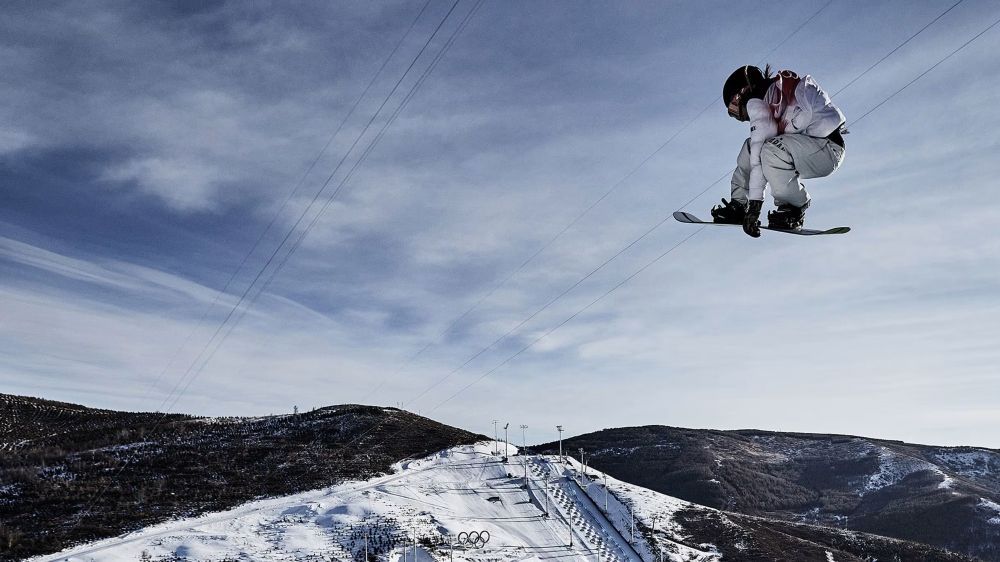
Chances are, the Milano-Cortina Winter Olympics will run at a loss. These Games have an initial operational budget of $1.9 billion, some of which will be recouped by the sale of broadcasting rights, ticket sales and merchandise. The Italian government has kicked in a further $4.2 billion of public money, mainly to cover the capital costs of building some of the new infrastructure. Ever hopeful, the organisers claim that locals will recoup $6 billion in revenues. That optimism is probably unfounded:
Most host cities do not see a positive return on investment: Beijing spent $40 billion on the 2008 Summer Games and generated only $3.6 billion in revenue, while London 2012 spent $18 billion and generated $5.2 billion. “For many cities and many countries,” said sports economist Robert Baade, the Olympics are “a money-haemorrhaging endeavour.”
Indeed. Between 1960 and 2016, an Oxford University study found, cities hosting the Olympics have gone over budget by an average of 156%. But the Milan-Cortina Games also raise a wider concern, as to whether the effects of global warming threaten the future viability of the Winter Olympics. Since Cortina last held the winter Olympics, in 1956, the town’s average February temperature has risen by 3.6 degrees Celsius. This isn’t an anomaly being experienced only at Cortina :
In fact, all the cities that staged the Winter Games since 1950 have heated up in the years since by an average of 2.7C (4.9F), according to scientists at Climate Central. That’s well above 1.4C, the warming average for the entire planet. And temperatures are set to keep rising. If greenhouse gas emissions continue at their current pace, 13% of global ski areas will have lost natural snow cover entirely by 2071 to 2100, according to a study by researchers at the University of Bayreuth in Germany published in 2024.
According to Climate Central, the combination of (a) the ballooning costs of staging the Olympic Games and (b) the warming temperatures at the declining number of potential hosting sites are putting the Winter Olympics at risk. The number of reliable host locations is dwindling as the planet warms. Earlier this year, an academic study found that out of 93 potential host sites, only 44% of them would be able to offer reliable conditions for the Winter Olympics in 2050. With climate-driven risk increasing, the insurance costs (faced by any venue staging the Winter Games) are rising in tandem.
Olympic officials recognise they have a problem. Reportedly, one of their responses has been to consider adding some new winter-tine sports to the Winter Olympics schedule (eg cross country running, cyclocross )that do not depend on the venue being able to offer reliable amounts of snow and ice.
It is not as if these environmental impacts (and related costs) lie somewhere off in the future. The reasons why the 2014 Sochi Winter Olympics in Russia ended up being the most expensive Games ever included (a) cronyism and corruption (b) the building of new infrastructure for the events from scratch and finally (c) the cost of making huge amounts of artificial snow, trucking it in, and spreading it around the course.
This process involves major energy costs. For the Beijing Winter Olympics of 2022, all of the snow was artificially generated and trucked in. Reportedly at Cortina – and despite the town’s high altitude – some 2.4 million cubic metres of artificial snow has had to be created and brought in, involving the use of 948,000 litres of water.
For the athletes, artificial snow reportedly poses a few different performance challenges, when compared to real snow. The artificial snow tends to be firmer, and therefore faster. On the upside that makes old records easier to break, but it can also heighten the risk of falls and crashes for the unprepared. However, since artificial snow is increasingly common in major competitions, elite athletes are building the need to adapt into their training schedules.
End Game
Sports fandom may resemble religious fervour, but the real comparison is more mundane. Asa much as anything, sport is a business, and fandom is being monetised in any number of ways – at the level of in-person attendance, as well as via television. Arguably, since the age of professional rugby began some 30 years ago, the All Blacks have gradually become more detached from the society in which they were formerly embedded, to the point where they have become just one more celebrity contender for the consumer dollar among a range of entertainment options. Over time, the price-driven erosion of the fandom experience and the widening social distance it entails may have consequences :
There is a risk that there will be a generational crisis when the kids on their phones all the time will not be acculturated to in-person participation,” said Paul Campos, a law professor at the University of Colorado and author of A Fan’s Life: The Agony of Victory and the Thrill of Defeat. “There’s nothing natural about being a hardcore sports fan—it’s a learned, self-destructive behaviour. If you don’t have the right cultural conditions, it dies.”
This Sporting Life
Over the course of a career spanning five decades, Haruomi Hosono has excelled at everything from folk rock to the experimental electronic music of Yellow Magic Orchestra, plus everything in between. This track “Sports Men” (from his 1982 album Philharmony) conveys his playful sense of humour :
I’m worrying everyday
I could be anorexic
I’ll have to get into shape
Can’t seem to find the right charge
Your mother, she might be a swimmer
Your father must have been a vaulter
Don’t put me in skates
Ping pong, I’m no great shakes…