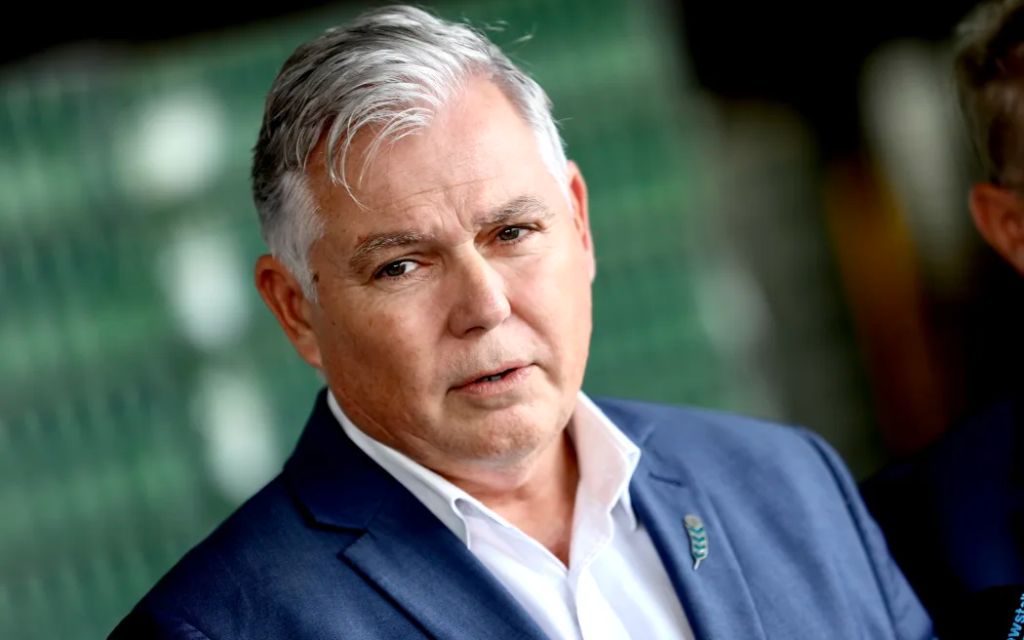
According to Police Minister Mark Mitchell, applying the new “move on” laws to the homeless will not put any extra strain on Police resources. Well, tell him he’s dreaming. Since Police will be the only responders legally empowered to move people on, they will inevitably get entangled – on a regular basis – with mentally ill people. Police will also be saddled with the time-consuming business of handing over mentally ill people to social agencies. That’s assuming teams of social workers will be available, properly funded and equipped with the necessary resources. Yeah right.
The only way this process will NOT drain Police resources is if the Police merely shunt 90% of the homeless down the street and around the corner. If so, many will return, and the cycle will repeat. One of the most politically inept aspects of the whole “move on” charade has been the lack of any additional funding for the social agencies that – magically, out of thin air – are being urged by Mitchell to “step up” and resolve the underlying needs of the people being moved on. These complex needs may be for shelter, food, addiction treatment, or for mental health diagnosis, counselling and prescription.
Question: on the advice Mitchell has been given, how long on average, is each Police use of their “move on” powers being expected to take? No doubt, some homeless people will move on voluntarily, but some will not. On average, what is the estimated measure of the likely time between the initial Police warning and the handover to a social agency? Such advice should provide a yardstick for just how much extra Police time is likely to be soaked up by this government initiative.
It is not as if Police have a lot of spare time on their hands. On average, it is estimated that only between 25-35% of crimes overall are reported to Police – and for a long time now in Auckland, fewer than 10% of the reported burglaries have been solved. Moreover, Police response times via the very old, problem-plagued 111 emergency call system are already known to be unsatisfactory, and the 105 call system is in even worse shape. In 2024, the average waiting time on 105 calls to the Police was over six minutes. Since 2024, Police have pulled back from responding to 111 callouts to do with mental health, provided there is no apparent, immediate threat to life and safety.
Given this climate, the Police Association is right to be concerned that Police are now being handed back frontline responsibilities for dealing with mentally ill people. Inevitably, the diversion of Police resources to enforcing the “move on” legislation (to help out Queen St retailers) will drain Police resources away from responding to, and solving, more serious offences that are affecting much wider numbers of people in Auckland, and nationwide.
Doing it differently
The way Mitchell has optimistically painted the picture, Police will be merely the intermediary between the homeless and social agencies. If that is true i.e. if the homeless are not simply going to be shunted out of sight from downtown Auckland to somewhere else – then why not take the Police out of the picture almost entirely?
Why don’t’ central and local government create, fund, and empower a special social agency to meet the needs of the homeless, starting with their need for permanent housing? Meaning: when Police see or are told of a mental health problem among the homeless, their first move would then be to call in the people trained for that work, to serve as first responders.
Right now, this kind of community agency – working in partnership with the Police department but operating at arms length from it – is what mayor Zohran Mamdani is putting in place in New York City.
As the New York Times has explained, New York’s new Department of Community Safety “would coordinate with, but operate independently of, the city’s large and powerful Police Department, dispatching mental health responders for certain emergency calls.”
On the campaign trail, here’s how Mamdani explained how this system would work, and be funded. The aim being to free Police resources up, so that they can deal with more serious crime:
Police have a critical role to play. But right now, we’re relying on them to deal with our frayed social safety net — which prevents them from doing their actual jobs. It’s one of the reasons only 39 percent of crimes are solved and police response times are over 20 percent longer than they were in 2022.
The DCS will coordinate across city agencies, including with the NYPD, creating a whole-of-government approach to improve safety outcomes. The DCS will oversee moving the below existing city Offices into Department jurisdiction, allowing us to cohere these programs and fill cracks in our systems. The budget for the Department of Community Safety will be $1.1B, approximately $605M of which represents transfers of existing programs into the DCS, and $455M of which represents new funding needs. It will be funded by better use of existing funding, finding government efficiencies, and cutting waste—combined with newly generated revenue where needed.
That last point about “newly generated revenue” is a relevant issue for New Zealand as well. Since Queen St retailers will benefit the most from these “move on” laws – and from the diversion of Police resources away from victims of crime elsewhere in the community – one has to ask: what matching contribution is the retail sector willing to make to what is (in effect) a business subsidy, and one that imposes opportunity costs on everyone else?
Footnote One: Already, there is tentative evidence that some homeless people moved on from Auckland may be re-locating in the likes of Manakau, Manurewa, and Papatoetoe. The bulk of the reported decline in Auckland City’s homeless numbers from a high of 940 in September to 668 in January directly reflects the numbers placed in housing under the “Housing First” policy.
Incredibly though, the extra money allocated last September for the “Housing First” programme is set to expire in June 2026. Why are food banks and Housing First programmes routinely subjected to such grudging and insecure funding – when the needs they meet are so pressing, and the value of the work they do is so evident?
Footnote Two: Homelessness is generally conceded to be a health problem, not a crime. Its roots lie in mental illness, poverty, drug use and the lack of options for those just released from prison. Police are not only the wrong people to be the first responders, they are not adequately trained for the job of dealing with the mentally ill, although Mark Mitchell can’t seem to make up his mind about that. (Bolded emphases mine).
Mitchell spoke of one case where two police officers were called to a job where a 19-year-old woman was experiencing suicidal thoughts. “She needs proper support,” he said. “Those police officers were tied up for an entire shift sitting in an ED looking after her. They’re not trained to do that.” – Mark Mitchell, NZ Herald, July 31, 2024
But in terms of the rough sleepers, no, police are not the lead agency on that, but they have the skills and the training and the powers to be able to deal with these people who often have mental health issues.” – Mark Mitchell, RNZ, 24 February 2026
“Police [are] not equipped or funded to provide a response to those experiencing mental distress, where there is not a threat to life or safety,” – from a report of the Cabinet Social Outcomes Committee. NZ Herald, 21 July 2024.
So which is it, Mr Mitchell? Are the Police adequately trained to do the mental health assessments and interim care to which you’ve just re-assigned them, or not?
Footnote Three: Relatively little media attention has been paid to the potential impact of the “move on” laws on vulnerable children. According to the Housing Ministry’s Homelessness Insight report ( June 2025) the median age of the homeless population is 55, but a disturbing 12% of the homeless are under 15 years of age. For years, it has been known that growing numbers of young people are facing mental health challenges.
Dr Hiran Thabrew, chair of the Royal Australian and New Zealand College of Psychiatrists, has said the College was particularly worried that children as young as 14 have been included within the scope of the “move on” laws. As Thabrew told NZ Doctor magazine :
Young people who are sleeping rough or engaging in disorderly behaviour are almost always doing so because they are already in crisis,” he said. “Threatening them with police enforcement rather than connecting them with the wrap-around support, they need risks causing lasting harm at a critical point in their development.”
In all likelihood, those children will continue to fall through the cracks. There is no sign of any increased funding for the social agencies that the likes of Mark Mitchell are calling on to “step up” and magically resolve this country’s growing homelessness problem.
Country music in the time of Trump
Country music might seem to be the obvious soundtrack to MAGA World. Yet even in the time of Trump, it still doesn’t get much airplay on mainstream US radio stations. Moreover, country music stations have infamously likened female country artists to the occasional tomato to be sprinkled sparingly upon a salad where male artists with dogs and pick-up trucks comprise the lettuce.
All of which makes Ella Langley’s “Choosin’ Texas” a real anomaly. Earlier this month, this was a Hot 100 number one pop hit that’s not only country, but sung by a hitherto unknown female musician. True, it is also a heartbreak song about her losing her cowboy lover to the stronger hormonal pull of her rival’s Texas ancestry. Good song, though, regardless:
The reception to Bad Bunny’s half time Superbowl show has settled into the usual divisions: the MAGA crowd hated it, almost everyone else loved it. Some C-list country musicians did perform in the Turning Point rival concert, making the usual claims of white nationalism. That only makes the statement by country music star Charley Crockett all the more admirable. Count how many bridges he’s burned with this Instagram message:
“They keep saying I’m a cosplay cowboy but they love a cosplay President. Some folks have been on here calling Muhammad Ali a draft dodger when y’all got one in the White House. When I was at the Grammys the other night I saw a guy get up and talk about Jesus, and then I saw Bad Bunny get up there and talk like Jesus.
The country music establishment should be taking notes on a Puerto Rican American who hasn’t forgotten his heritage and brought his culture’s traditional music back to the front, showing the world something new with it.
The President is a grifter who bankrupted 6 casinos. That’s pretty extraordinary considering it’s a rigged business in favour of the house. The only thing he’s good at is filing lawsuits and portraying a successful business man as a reality TV actor. Last time I checked Elon Musk was an immigrant from South Africa but there he is standing in the White House buying our elections. Let’s deport his ass and send Peter Thiel back with him since they both openly believe in a post-democratic society where men of their class are above the law.
Forgive me if I have a problem with a 34 time convicted felon running this country when I lost the right to vote or own a weapon for years over marijuana. As long as you’re hating the oppressed and loving your oppressor you’ll never know why our generation is poorer than our parents and grandparents.
As a great man once said it’s welfare for the rich and rugged individualism for the poor. If you can sleep at night licking their boots that’s between you and yours, but that type of thinking isn’t freedom. It’s mental slavery. Every single right we have as a people wasn’t handed to us. We had to fight and take it. Judge a man by how he treats the poor and those who he views as being able to do nothing for him. Don’t forget why Muhammad Ali said ‘I am America.’ Remember the coal miners of Harlan County, Kentucky. I believe in what we can be. Ride on.”
Since 2019, Crockett has released thirteen studio albums. His life story makes great reading, as this Texas Monthly article proves. Here’s the new single from this year’s first Charley Crockett album: