If the economy was an apartment building, the recovery would be the party that’s beginning to kick off in the penthouse flat, while everyone else in the building is trying to get some sleep before the daily grind starts again.
Not surprisingly, the households that are doing OK – ie those on incomes where an unexpected dentist bill won’t send them to a food bank – are feeling more optimistic about the year ahead. Some of them may even be spending more. Yet (a) they’re a relatively small segment of the population and (b) the retail economy doesn’t seem to have had a very good Christmas season. The Reserve Bank analysis of credit card billings in December found only an .8% rise on the preceding year, and obviously, that’s considerably less than the annual inflation rate. As the interest.co.nz website concluded this week :
No great sign of a retail recovery here. And for all of 2025, billing on credit cards came in at $46.4 bln, a mere +1.4% gain over the 2024 total of $45.8 bln, and also confirming dour retail conditions.
On the upside, both the construction industry and hospitality sector are reportedly staring to climb back out of the basement. Oh, and also….169 new tractors were registered in the month of December, making that the very best December tractor registration figure since 2022.
Any hopes of a tractor-led recovery though, will have been dampened by the news that inflation has risen to 3.1%, and that’s back outside the Reserve Bank’s zone of tolerance once again. Meaning: on average, the cost-of-living crisis is getting worse.
Out in the mortgage belt, this also means that any household income gains from the recent round of interest rate cuts is going to be short-lived. The next round of interest rate hikes is now likely to occur before the November 7 election. The really bad news for the government is that those rate rises may arrive as early as May. Already the banks have started lifting their long term fixed term rates. Also, the GDP figures this week were worse than expected. Can National credibly claim to be fixing the basics, and building for the future? Hardly.
Beyond the horizon
The coalition government’s campaign strategy is aspirational, and based on convincing voters that things are getting better. Jam tomorrow, folks – once things have been fixed, and the concrete poured for our mutual, future prosperity… sometime over the rainbow. In the meantime though, there is only a smattering of evidence that better times lie ahead for any more than a select few of the voting public. It’s a bit like the Rapture. In time, only true believers will be uplifted by having faith in Finance Minister Nicola Willis.
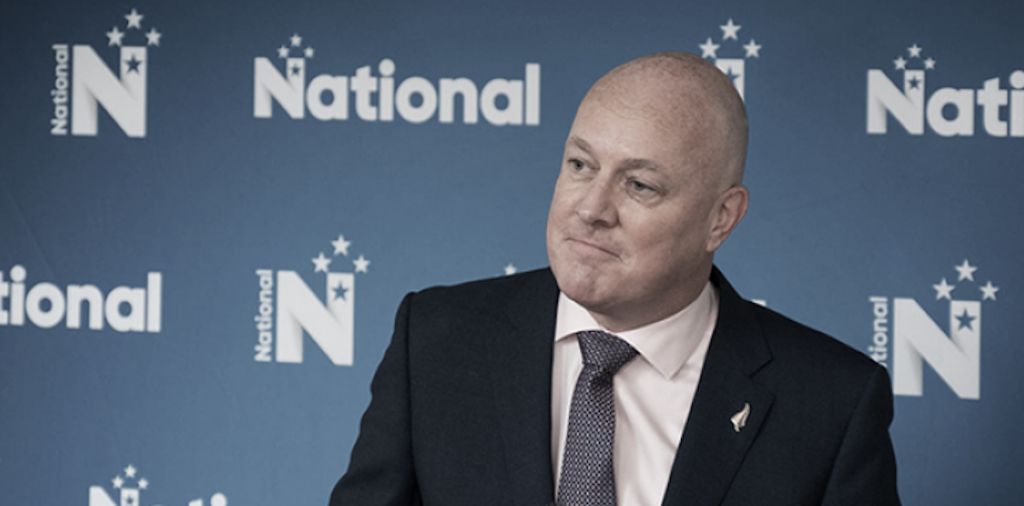
That being the case, there’s a genuine risk that 2026 is going to be a prolonged exercise in cognitive dissonance, with Christopher Luxon telling New Zealanders that they’re on the road to prosperity, when in fact, more and more of us will be on the road to the food bank.
That’s the problem for National messaging going into this election. Fewer and fewer voters trust the messenger. In the last Taxpayers Union poll, Luxon’s unfavourability ratings – already at a historical low for a first term PM – plummeted to new depths. If the National caucus had rolled Luxon in late November, a new leader would have had a far better chance of making their election pitch sound convincing. New broom, new wrappings etc. The caucus muffed their chance.
As a result, more and more of the public is feeling that the country is being led by someone who seems to know nothing about the challenges they are facing, and cares even less. The caucus has evidently concluded that the centre-right can win this year’s election despite Luxon. They’re probably right. Yet he’s a proven liability. One can safely bet one’s life savings on the proposition that Christopher Luxon will not be leading the National Party into the 2029 election.
Footnote: It is also a safe bet that the cost of living crisis won’t have been “fixed” by Election Day. Not even close. So Labour has every reason to single-mindedly bang on about affordability and the cost of living crisis. Unfortunately, its problem is doing so is pretty obvious.
Somehow, the Labour party is still being led by the same two politicians – Chris Hipkins and Carmel Sepuloni – responsible for Labour being routed at the last election, after blowing their chance to use their unique majority in Parliament to pass a raft of progressive legislation. To centrist voters, Hipkins/Sepuloni are the living reminders of why they came to loathe Labour last time around. For progressives they embody the futility of voting for a party that aspires to be nothing more than a nicer, kinder version of the status quo.
Footnote Two: The only logical conclusion that can be drawn from leaving Hipkins in place is that Labour decided quite some time ago that the 2026 election was a lost cause. Therefore, it has chosen to keep its future leadership hopes (Kieran MacAnulty? Craig Renney?) under wraps, and not waste them on what it regards as a suicide mission this year. Progressive voters could be forgiven for reaching the same conclusion, and staying home this year.
Footnote Three: Currently, New Zealand First is reaping a lot of support, as a protest vote. That’s incredible really, given that they’re jointly culpable for the hardship that so many New Zealanders are experiencing.
If Labour wants to run a strong affordability/cost of living campaign, it has to be willing to go hard against Winston Peters as being co-responsible, and no friend of either the working poor or the struggling middle class. But will they? Or will Labour revert to type and pull its punches, in the hope of wooing him in the post-election negotiations? Labour should be ruling Peters out long ago, just as he has ruled Hipkins out.
Wolf Parade, Re-Heated
In a fluke example of career revival, the 2005 track “I’ll Believe In Anything” by Wolf Parade has just become a Very Big Thing all over again, thanks to its prominent use in Heated Rivalry, the smash hit gay hockey television series. Episode five of the show was even named after the song.
This takes some adjustment. bizarre. Speaking personally, two tracks from that 2005 Wolf Parade album Apologies To the Queen Mary (“Ill Believe In Anything” and “Shine a Light”) were good company and solace during that not-so-great year.
Who knew that 20 years later, one of those songs would have become a gay anthem? Not Wolf Parade I’ d wager, who were cursed at the time by the constant comparisons with (a) their more successful Canadian compatriots Arcade Fire and (b) with Modest Mouse, the band led by their producer, Isaac Brock.
Not without reason, either. On say, the “Grounds for Divorce” track off the Queen Mary album, its hard to get the Modest Mouse classic “Gravity Rides Everything” out of your head. Overall, I wonder how Spencer Krug feels to be now in his 40s, singing to a whole new audience the anguished lyrics he wrote as a twenty-something…
Here’s “I’ll Believe In Anything”…a near-perfect expression of the desperate urge to escape together, whatever the cost.
If I could get the fire from the wire
I’d share a life and you’d share a life..
If I could take the fire from the wire
I’d take you to where nobody knows you
And nobody gives damn
The tension is there right from the see-sawing intro, before the drum arrives like some creature beating on the jailhouse door:
Similarly, the “bang your head against the wall” arrangement on “Shine A Light” is a good setting for the lyrics, which struggle to make peace with the intolerable:
I spend boring hours in the office tower
In a bus, on a bus back home to you
And that’s fine, I’m barely alive
Its just a matter of time, no one gets out alive
And I’m content, I’m content, I’m content to be quiet…
You know our hearts beat time out very slowly
You know our hearts beat time
They’re waiting for something that will never arrive…