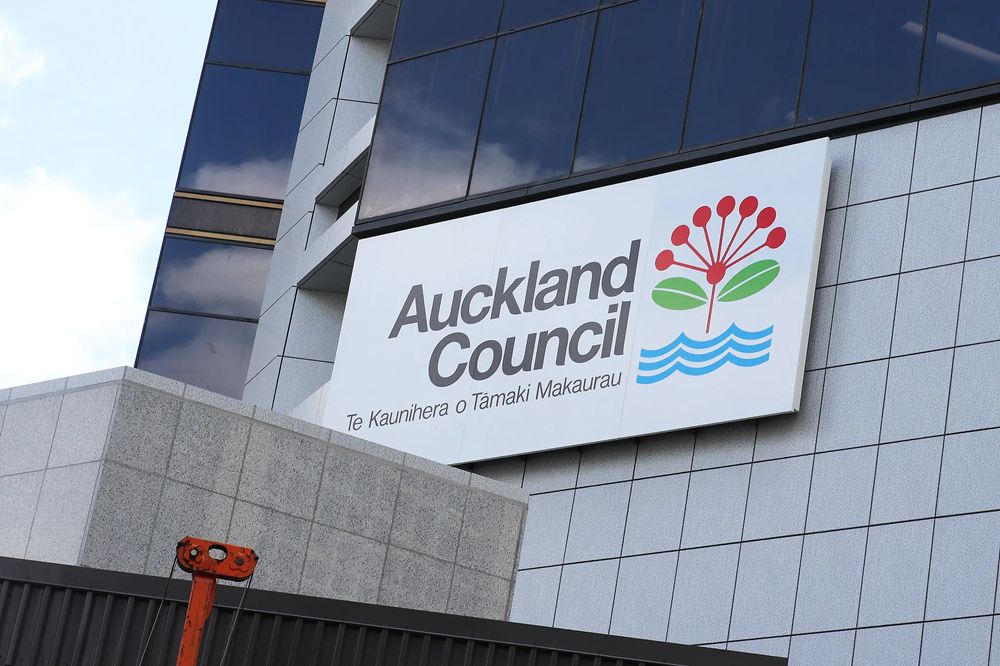
For many councils, the Luxon government’s plan to restrict the ability of local councils to increase rates to a range of between two and four per cent annually, is a recipe for :
(a) cutting local public services
(b) increasing user charges for libraries, swimming pools, rubbish collections etc
(c) privatising council services
(d) further jeopardising the credit rating of councils
(e) deferring maintenance, an option known to be false economics, in that it only increases the cost of the catch-up repairs
(f) stifle infrastructure projects, and thereby reduce national GDP growth. (Infrastructure NZ is not happy about this.)
The notion that local councils have been systematically extravagant is a myth. Convention centres and stadiums aside, the vanity projects indulged by councils tend to be minor, and at the margins. The vast bulk of council budgets is already being spent on core services (roading, water infrastructure etc) that have been sharply increasing in cost. A couple of years ago, Local Government NZ asked Infometrics to research the cost pressures being experienced by councils, post Covid, and with regard to matters that were almost entirely beyond their control:
*Capital cost escalation had accelerated substantially over 2021-2023, with the overall capital goods price index peaking at 13%pa, and civil construction costs at 15%pa.
*In greater detail, transport capital cost escalation peaked at 19%pa …[with] water systems peaking at 15%pa.
*Cumulative inflation since 2020 (when Long Term Plans were last assessed) is more than 25% across the capital costs that local government invests in. Civil construction costs are up 27% over the last three years (compared to 19% for consumer price inflation).
*Bridges are 38% more expensive to build over the last three years, and sewerage systems are 30% more expensive. Roads and water supply systems are around 27% more expensive.
Central government has been part of the problem. Last year, an NZIER report examined the added, significantly underfunded compliance costs being imposed on local government by central government’s own demands and decisions.
Fresh water management, the provision of added tourism facilities, the added infrastructural, operational, legal and insurance costs of urban intensification, climate change adaptation and recycling are among the areas cited in the NZIER report. Evidently, central government not only regularly fails to adequately compensate councils for the impacts of its policies. Wellington it also fails to assess the likely downstream effects on rate-payers of its own decisions. As the NZIER report says :
- Many central government reforms result in increased costs for ratepayers, which central government does not adequately address when making its decisions.
- Central government underestimates what its reforms cost councils.
- Councils face high sunk costs when policies change; like freshwater management, which has changed every three years.
- Ratepayers are now subsidising supposed ‘cost-recovery’ services like liquor licensing because central government sets these fees, and they haven’t increased for a decade.
- True costs are hidden because councils absorb them by reducing other service delivery.
In sum, as NZIER CEO Jason Shoebridge has indicated, much of the recent pressure on rates has been due to governments offloading responsibilities (and the related costs of implementation) onto councils, but without central government providing the adequate levels of co-funding required. “Governments of all stripes have come up with ideas and reforms in Wellington.” Shoebridge said, “then told councils to deliver on them, which puts pressure on rates outside of our control.”
Relieving the pressure on rates
Shoebridge was dead right. As LGNZ pointed out earlier this year, central government ‘s contributions to councils have averaged around 10% of councils operating income since 2000, which is not enough to meet increasing legal and infrastructure costs.
“Other OECD countries transfer significantly higher proportions of central taxes to local governments. In New Zealand, this might include central government re-imbursing taxes and other revenues it captures due to local government activity (such as the GST on rates). …central government could also pick up local costs that have national benefits, such as water and wastewater capacity at prime international tourism destinations.”
If the coalition government was seriously interested in anything other than currying favour with disgruntled ratepayers, its reform efforts would be considering how local government can be granted access to additional means of revenue generation, besides rates. Roughly speaking, councils derive about 80 % of their income from general and targeted rates, with the likes of parking fines, fees for amenities and interest on investments making up the balance. As LGNZ said earlier this year :
This heavy reliance of rates is clearly inadequate to pay for local operational and infrastructure costs. This is despite recent court decisions giving councils more leeway to set, raise and target rates. But to really make a difference, councils must also be given the legal authority to raise additional revenue themselves. This could include excise taxes on petrol and visitor accommodation, sales taxes and stamp duties.
Unfortunately…as soon as it gained office, the Luxon government scrapped a successful example of one prime revenue-gathering council alternative to rates. LGNZ, again:
As the recently repealed Auckland regional fuel tax demonstrated, excise taxes can be an effective way to raise funds for specific activities. The roughly $780 million it raised helped pay for the Eastern Busway ($272 million) and new commuter train cars ($330 million).
A targeted tourism bed tax would be a similar option. The excise tax example though is a useful reminder that in general– whether it be via service cutbacks, user fee increases, or deferred maintenance – the public is still going to end up carrying the can for this rates cap exercise.
Central government obviously feels there are political gains to be made by posing as the champion of hard-pressed ratepayers. Yet the “disciplines” involved will still come at the public’s expense, one way or another.
Footnote : The rates cap is due to take effect in little over a year, from New Years Day 2027. Long term planning though, will be hit immediately. Theoretically, councils may be allowed in future to make a case for exceptions under unique circumstances (such as a climate change disaster, or a fast-tracked infrastructure build) to a regulator appointed by central government. However, the Australian precedents indicate that such exceptions are rarely granted.
Chile’s change of course
The polls for Chile’s election run-off vote on December 14 are sending a clear message. Chile is about to elect the most socially conservative, far right candidate to lead the country since the dictator Augusto Pinochet. The writing has been on the wall since the first round of voting ion mid November, when the left wing candidate Jeanette Jara barely scraped in ahead of her far right rival Jose Antonio Kast, and a number of other right wing candidates.
In the second, decisive round the right wing has united behind Kast, a Catholic father of nine who opposes abortion even in cases of rape, blames immigrants for Chile’s crime rate, and promises to build border ditches along the borders with Peru and Bolivia, in order to keep immigrants out. Kast is promising to slash public services and to pursue an extreme austerity programme similar to what has turned Chile’s neighbour Argentina into a basket case entirely dependent on U.S. bailouts for its survival.
I mention Chile’s situation in order to illustrate how significant events routinely flash by almost un-noticed, if they happen to fall outside the boundaries of Western media coverage. Given its history of liberation from repression over the past 50 years, Chile’s imminent fate seems particularly poignant. Compared to its neighbours, Chile has been a relatively stable and prosperous democracy during the past decade of centre-left rule – which helps to explain why Chile’s well-run economy has become such a magnet for the region’s poorer immigrants:
Chile’s foreign population has grown since 2017. The National Migration Service said in December 2023 that the number of foreigners in the country had reached more than 1.9 million people, up more than 46% from 2018. Official estimates suggest at least 330,000 are undocumented migrants living illegally in the country, many from Venezuela. Kast has blamed rising crime on immigration, though several studies suggest that those born abroad commit fewer crimes on average than Chileans.
Tragically, Chile’s relatively successful economy and stable social programmes are now going to be up-ended, in order to repeat the debacle in Argentina under Javier Milei’s ham-fisted leadership. Milei got swept into power on a promise to revive Argentina’s fortunes after a couple of decades of populist misrule. Since being elected in 2023 however, Milei has taken a chainsaw to core social services, and to state investment in health and education, and virtually everything else. His libertarian experiment has consisted of a single minded focus on lowering the inflation rate, and Milei has been willing to trash the entire Argentinian economy in order to do so.
This year, Argentina’s solvency has been dependent on a $20 billion rescue package offered by US President Donald Trump at the same time as Trump has been cutting access to healthcare and food aid for struggling Americans at home. For the vast bulk of Argentinians, their standard of living is now objectively worse than it was under the corrupt Kirchner/Fernandez regimes that had propelled Milei into office.
The lesson from the Milei experiment? Unpopular governments can sometimes be replaced by even worse ones. Chileans seem about to make that same discovery.
Murder on the high seas
As a thought experiment…imagine just for a moment ,that China was repeatedly ordering its jets to fire rockets at South Korea’s merchant ships and was sinking them, in international waters. Not only would those targeted ships be set on fire from bow to stern, but China’s Defence Minister would then order his pilots to kill any survivors who had made it into lifeboats, to ensure that everyone on board died. These repeated incidents being only a prelude to China declaring that South Korea’s air space closed, its leaders were terrorists, and the whole country being apparently readied for a regime change carried out by China’s military.
China, of course, is doing so such thing. Yet America is currently doing all of the above, with Venezuela (and its vast oil reserves) as the target. Merchant shipping is being repeatedly attacked by US forces in the Caribbean and eastern Pacific, if the boats in question have emerged from ports in Venezuela. At last count 80 civilians have lost their lives in these extra-judicial murders.
Safe to say… if China had done anything (to any other country) comparable to what the Americans are doing with impunity to the citizens of Venezuela and Colombia, we would have been on the brink of World War Three, weeks ago. Our media would be righteously incensed.
The US says the targeted ships were carrying drugs, but has produced no evidence to back up that claim. Even if the boats were carrying drugs, there is an interdiction procedure for intercepting such boats. Instead, the US is choosing to execute all the civilians onboard without legal process. Those ordering these executions are in violation of international law, and those carrying out the illegal orders are also liable for prosecution for war crimes if – all the way up the chain of command – those orders were not being challenged beforehand. In the wake of WW2, German officers were executed for doing precisely what US military personnel are doing in international waters, today.
To date, Trump’s defenders have invoked the laws of armed combat (LOAC) to claim that it is entirely lawful for those in uniform to obey their orders. Problem being, no formal state of armed combat exists between the US and Venezuela. Therefore, citing the laws of armed combat is actually a non sequitur.
As Brian Finucane, a former US State Department lawyer and expert on the laws of war told the Intercept news site: “There is no evidence that these people were lawful targets. The Trump administration hasn’t established that there was an armed conflict, hasn’t established that the law of armed conflict govern any such hostilities, and hasn’t established that the people aboard the vessels, the vessels themselves, or the cargo were lawful targets under the laws of war.”
Besides….as the Nuremberg trials of Nazi war criminals made clear… “ just following orders” is not a valid defence for war crimes. To date, our own coalition government has been spectacularly silent about these blatant US violations of (a) international law, and of (b) the rules governing the free flow of maritime trade. In the recent past, New Zealand had been willing to trumpet these principles as providing a valid reason to join US-led military forces in the Red Sea. According to the coalition government at the time:
The ongoing indiscriminate Houthi attacks on international shipping are illegal, against our values and continue to affect New Zealand’s economy,” [Foreign Minister Winston] Peters says. “This decision [ to deploy troops] demonstrates our support to the international rules-based system and freedom of navigation.”
Evidently, Peters and his Cabinet colleagues are more than happy to allow the US to violate those same principles whenever it sees fit. And if these attacks are a prelude to a US invasion of Venezuela and regime change…well, that seems OK by us, too.
Footnote:
In the same week that the Trump administration was defending its extra-judicial executions of unproven drug couriers, it was also pardoning a proven major drug trafficker (and former president of Honduras) who had actually been convicted of ferrying huge amounts of illicit drugs into the United States. Go figure.